Short answer: AI tools for small restaurants help most with the work around the kitchen — bookings, common questions, menu words, review replies, and stock lists — and they only work if they fit a busy service and a small team. Start with one job, test it for a month, and keep it only if your team and your guests both feel the difference.
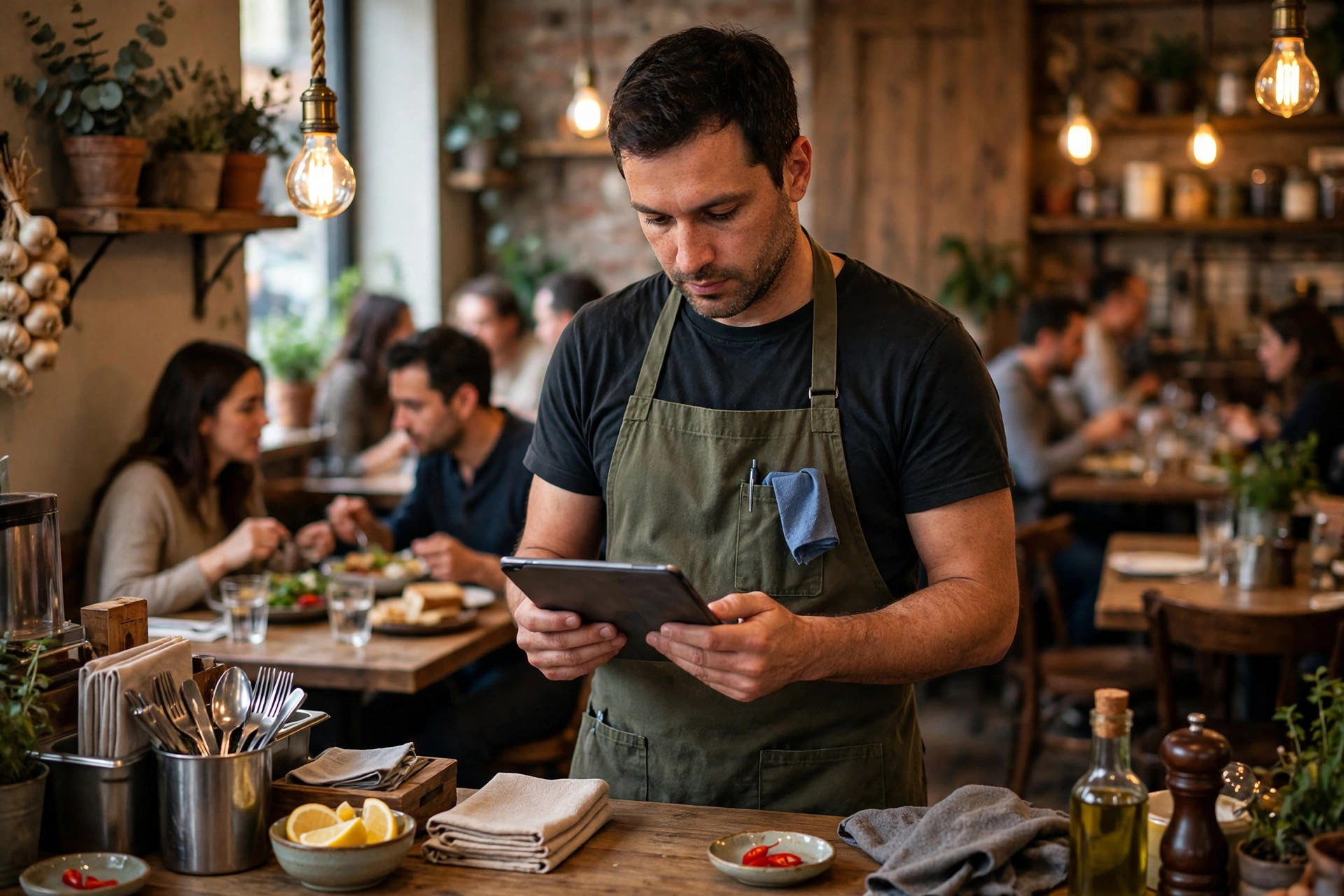
AI tools for small restaurants start with the phone, not the kitchen
A small restaurant lives or dies on the phone and the door. A guest calls at 5 pm to book for 7, another asks if you have a table for eight on Saturday, and a third wants to know if the soup has nuts in it. Your team is setting tables, the kitchen is prepping, and the phone keeps ringing. That is the problem AI actually solves in a restaurant. Not the cooking. The calls, the bookings, and the questions that repeat every day.
So start there. For one week, write down what your team answers most: hours, directions, bookings, allergy questions, and "do you have a table tonight?" If most of those have a fixed answer, AI can help a lot. If most of them need a person — a large party, a complaint, a guest with a serious allergy — AI helps less, and you need more staff hours, not more software. The pile tells you the truth.
One line you must draw early: allergy questions are not a job for AI alone. A guest with a serious allergy needs a person who knows the kitchen, the ingredients, and the risk. Set that rule in writing, tell your team, and make sure any tool you use hands those calls to a person fast. That rule protects your guests and your restaurant.
Bookings, no-shows, and the empty table
An empty table on a Friday night costs a small restaurant twice: once in lost sales, once in a guest who books somewhere else next time. Booking tools fix a lot of that by letting guests pick a real time, sending a short reminder, and letting them change a booking without a phone tag game. AI adds the nudge: a reminder at the right time, in the way the guest likes, with a simple way to confirm or cancel.
The trick is to make cancelling easy. A guest who can cancel in one tap will cancel, and you can fill the table. A guest who has to call and wait will just not show up, and you lose the table and the guest. So check that any tool you use makes cancelling simple, and that it frees the table right away. Then watch the numbers for a month: how many no-shows, how many tables filled after a cancellation, and how many booking calls your team still handles by hand.
Menus, photos, and words that sound like your room
A menu is a small piece of writing that does a big job. It has to tell a guest what the dish is, what is in it, and why it is worth ordering, in a few words. AI can draft menu descriptions from your notes — the ingredients, the way it is cooked, the part your regulars love — and give you a clean first draft in a minute. You then fix the facts, cut the puff, and add the detail only you know.
The same rule holds for photos and social posts. AI can brighten a photo, tidy a background, and draft a short post about tonight's special. But a photo should look like the dish your guest will actually get, not a shinier version of it. Guests notice the gap when the plate arrives, and they remember it. Keep the photos honest, keep the words short, and let the food do the talking.
A simple routine that works: write five short notes about a dish — what is in it, how you cook it, who orders it, what it goes with — and let AI draft the description from those notes. Read it out loud. If a line makes you cringe, cut it. If it sounds like your room on a good night, keep it. For a wider look at picking tools the same way, read our guide on how to choose software for a small business before you pay for a yearly plan.
What good menu words sound like
Good menu words are short and specific. They name the ingredient, the cooking, and the taste, and then they stop. They do not say "mouth-watering" about every dish. They do not promise what the kitchen cannot do. And they say clearly what is in the dish, so a guest with an allergy or a diet can decide fast. That clarity is kindness, and it is also good business.
Reviews: AI tools for small restaurants and the reply that matters
Reviews are where a small restaurant wins regulars, and the reply matters as much as the review. A guest who left a kind review and got a short, real reply feels seen. A guest who left a complaint and got a copied reply feels ignored. AI can draft the reply, but you must fix it before you send it. Thank the guest by name, mention one real detail from their visit, and answer the point they raised.
A table: which job, which kind of tool
| Your repeat job | What AI can do | What your team still does |
|---|---|---|
| Common phone questions | Answer hours, directions, booking requests | Allergies, large parties, complaints |
| Bookings | Offer real times, send reminders | Handle the big tables and special nights |
| Menu words | Draft descriptions from your notes | Check facts, add the real detail |
| Review replies | Draft a short reply | Fix it, add a real detail, send it |
| Stock and orders | Draft lists from sales and recipes | Check the kitchen, order what you need |
That table is also your shopping list. If a tool does not name one of those jobs, ask what job it does for you. If it names all five, ask which one it does best, and test that one first.
Stock, staff, and the quiet admin
Stock is the quiet leak in a small restaurant. You run out of the dish everyone orders on a Friday, or you order too much of the thing nobody wants, and the waste eats your margin. AI can draft a stock list from your sales and your recipes, and flag the dishes that sell fast and the ones that sit. That helps. But it cannot taste, smell, or see the fridge. Your kitchen team still checks the stock, counts what is there, and orders what you need.
Staff rotas are the same kind of job. AI can draft a rota from your bookings and your team hours, and flag a gap before the weekend. Your manager still fixes it, because a rota is not just hours — it is who works well together, who needs a night off, and who is learning a new station. Use the draft, then fix it with the people in mind.
Cost matters here too. Add up what you pay for all your tools, then ask what each one saves you. A booking tool that cuts no-shows pays for itself fast. A social tool that nobody opens is a leak. Our guide to small business software costs in 2026 shows how to do that maths on one page. And if you want to cut the admin pile further, our guide to AI tools that automate admin work for small businesses covers the same routine for the office side.
If you film your dishes for social media, TubeForge shows how creators automate the video side of the same work, so a short clip of tonight's special takes minutes, not an evening.
How to start this week without buying anything new
Pick one job — review replies is the safest start for most restaurants. Reply to every review this week in your own words, with one real detail, within a day. Use any AI chat tool you already have for the first draft if you like, then fix it before you send it. That is the whole test, and it costs you nothing.
Then write down your five most common phone questions and the short, real answers for them — two lines each, in your words. Put those answers where your team can copy them fast. That small file will save you more time this month than a new tool you have not learned yet. Next, look at your booking list and call the guests who booked for the weekend to confirm. A real call beats a clever tool every time.
AI tools for small restaurants work best when they stay in their lane: the phone, the bookings, the drafts. The cooking, the room, and the guest stay with your team. Start small, test on one job, listen to your team and your guests, and let the numbers decide. For the bigger picture, our guide to the best AI tools for small business owners in 2026 is a good next read, and if you also sell online, our guide to the best AI tools for small retail shops shows the same idea in a shop.